Showing posts with label All about Cedros/Icacos!!!. Show all posts

Friday, 25 November 2016

Constance Coconut Estate

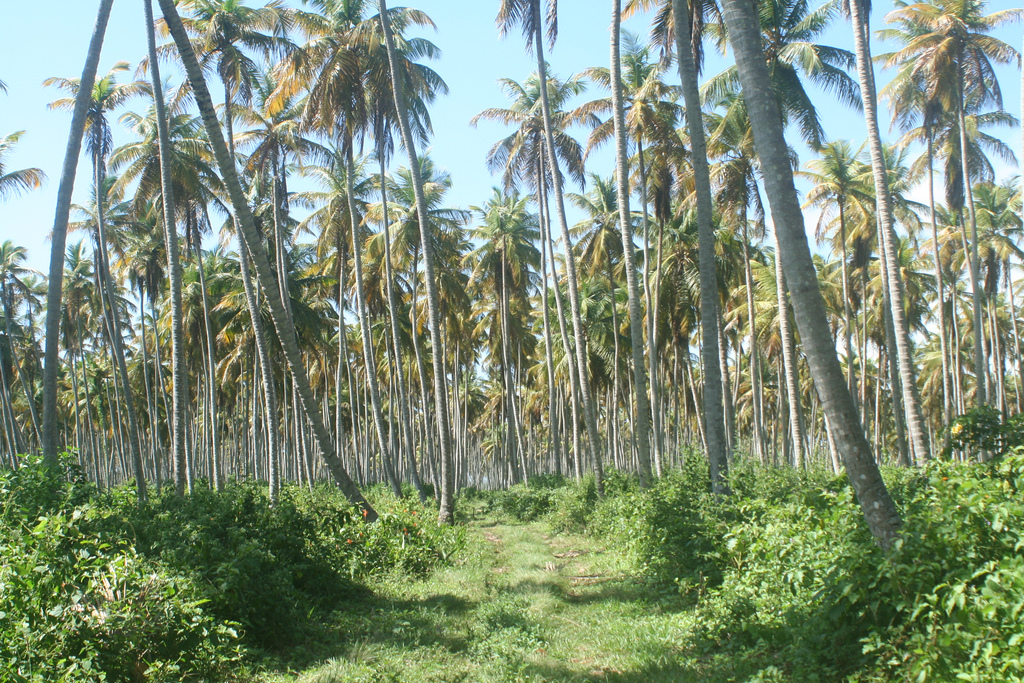
The largest coconut estate in Trinidad is located in Fullerton Village, just off Icacos Point in South-western Trinidad.  Many would say, the early history of Icacos began with life on the estates. Constance estate, which lies on the sea front, was the centre of social, religious, sporting and economic activities.

Roadway to Icacos

Coconut Estate

Philip Agostini, the present owner of Constance, the largest coconut estate in Trinidad, said, "Since 1870 the estate has lost approximately 700 acres to the sea, mainly on the northern side of the beach.  Houses along the beach front have down and vast amounts of coconut trees have been lost to constant erosion."  As the sea continues to claim new territory, it has changed the entire beach front.  following these events, Agostini called a group of estate owners in the peninsula and together they formed the Copra Planters Association which later became the Coconut Growers Association.

Fallen coconut trees from eroded land

Sunday, 13 November 2016

Ten Days of Muharram: The Cedros Hosay

The quiet fishing village of Cedros in south-west Trinidad came to life in Ten Days of Muharram, which unveils events of one of T&T's most eventful and cultural festivals - Hosay (Muharram).   The event commemorates the martyrdom of Hassan and Hussain (Hussein), grandsons of Prophet Muhammed.  Hosay is a popular celebration among minority Shiite Muslims and is celebrated globally.  The Hosay festival is celebrated during Muharram, the first month of the Islamic lunar calender.  Participants are organised into five camps and each group is responsible for constructing miniature temples (tadjahs) to depict the tombs of Muhammed's two grandsons.  On the first day of Muharram, Muslims begin prayers at the Chawk (a holy place for prayers).  the miniature tadjahs (small hosays or pitti bongie) were paraded through the streets of Cedros accompanied by tassa drummers.

A close-up view of a tadjah during Hosay in Cedros

Tadjah pulled along the Cedros Main Road
Making it's way through the streets of Cedros

Hosay has a history.  It originated in the estates of Cedros that were run by the French creole.  Petit bondieu is a French term which means small Hosay.  What you would also find too is a lot of the other cultures and religion is an integral part of the process.  The celebration of the Hosay in Cedros has taken on all types of nuances and resonances from other religions including Roman Catholic, Hindu, Baptist, creating a product which is uniquely Trinidad.  Our Hosay in Cedros you will never find anywhere else in the world in terms of the way they construct their tadjahs.  There was the participation of the stickfighters which is a dying art form but is also a rich part of that culture.
Hosay about to drown

Spectators lined the streets to get a glimpse of the beautifully decorated tadjahs.  It is also said that there are different events in the lead up to the final night.  One of which is called the 'flag night' where members walk through the streets with flags.  The final thing is to disperse of the hosays in the sea. 
Dispersing the Hosay in the sea

Hosay going down

St. Peter's (Fisherman Fete)


On the 29th of June marks the celebration of Peter's birthday, the fisherman and former Apostle to Jesus.  This is met with much anticipation on the Trinidad and Tobago isles of fete and frivolity!  The Seafood Industry Development Company boasts that the local marine fisheries sector in 2005 contributed TT$ 63 million to the country's Gross Domestic Product.  It is without a doubt that episcopal church services in the Roman Catholic communities as well as its denominations continued this year with fishermen receiving their blessing from the parishes.  


In addition, hundreds of islanders of all races and religions still turned out to the festivities at the shores and bays of fishing villages island wide for beach parties, fun activities, delectable fish and food!  The fishing village of Cedros in the south western peninsula of Trinidad is famous for this particular fete.  People from all over the island come to Manmohansingh Park at St. Marie village in Cedros. The crowd thickens every year with cars lining the streets, vendors setting up shop and Dj's on the beach hosting the inaugural "fishermen fete".  Other parts of the island like Carenage had their annual cultural presentations, fish broths and danced away with frivolity, gaiety and unity.  


So next time you journey to the south land be sure to participate in the free fun filled fisherman's fete!  You'll enjoy it and be grateful!!!

Saturday, 5 November 2016

Cedros & Icacos Volcano Exploration

A place worth visiting is the Cedros Peninsula, which starts from Bonasse Village in Cedros and extends all the way to the villages of Fullerton and Cedros.  It takes approximately 3 hours from Port-of-Spain to get there but it is well worth the long drive to know this magnificent unspoiled South Coast Scenery.

Cedros Jetty

  • MUD VOLCANO
Although there is the deposition of silt from the Orinoco River, sea erosion continues to destroy the porous landscape and many of the coconut trees and estate building reclaimed by the sea.  At the top of Columbus Bay, located a few metres from the shore there are three landmark rocks referred to as the Los Gallos or the Cocks.  Further inland in the Cedros Peninsula, there is a chain of mud volcanoes.  The Galfa Mud Volcano situated in the Green Hill Area at Marie Street in Bonasse.  The Columbia Mud Volcano Fields consist of a series of volcanoes and found one mile inside a coconut estate between the villages of Fullerton and Icacos.

Mud Volcano

Wednesday, 2 November 2016

History of Icacos!

Icacos Point is the south westernmost point in Trinidad and Tobago situated at the tip of the long peninsula that forms St. Patrick County and is only 11 kilometres away from neighbouring Venezuela. The village was given its name by the original inhabitants of the area, the Amerindians, who named it after a type of common shrub of the rosaceous or rose family, icaco, that grew profusely there. 
By the 1820's, Icacos increasingly became an agricultural area with estates such as Columbia and Constance coming into being. In 1877 the first school in the area was built on Constance estate with forty-nine students in attendance under the tutelage of school-master, Mr. Lazare.

By 1881, census reports show that there were five-hundred and two people in the area but with no public services available except through the nearby Cedros area.
Today, Icacos has largely abandoned its agricultural roots and villagers engage mainly in fishing for their sustenance. Many types of fishing are engaged by the fishermen such as drift-net fishing, "floating" and long-line fishing. However, shrimp-fishing, which is done primarily at night, is one of the most popular forms of fishing. This form of fishing is not without controversy because the shrimp beds lie in the direction of Venezuelan waters and many a fisherman have been arrested and their catch confiscated. Fishing agreements made between Venezuela and Trinidad and Tobago have helped the situation somewhat.